How to Get Back Into Exercise After a Break (Without Overdoing It)
If your routine has gone a little off-piste over the summer, you’re definitely not alone.
Holidays, childcare, social plans, warmer weather, disrupted schedules… all of these things can make our usual exercise habits a bit harder to stick to. Then September arrives and suddenly there’s a temptation to launch straight back into everything at once.
But if you’ve had a few weeks away from regular movement, the best way back usually isn’t to try and pick up exactly where you left off.
It’s to start where you are now, rebuild gradually, and find a rhythm you can actually sustain.
1. Start with less than you think you need
One of the easiest mistakes to make after a break is doing too much, too soon.
You might remember what your body was capable of a couple of months ago and expect it to feel exactly the same now. Sometimes it does. Sometimes it really doesn’t.
Your first few sessions back don’t need to be your hardest.
That might mean:
doing a shorter practice than usual
choosing one or two sessions a week instead of four
taking more breaks
reducing weights or intensity
choosing simpler versions of movements
giving yourself more recovery time between sessions
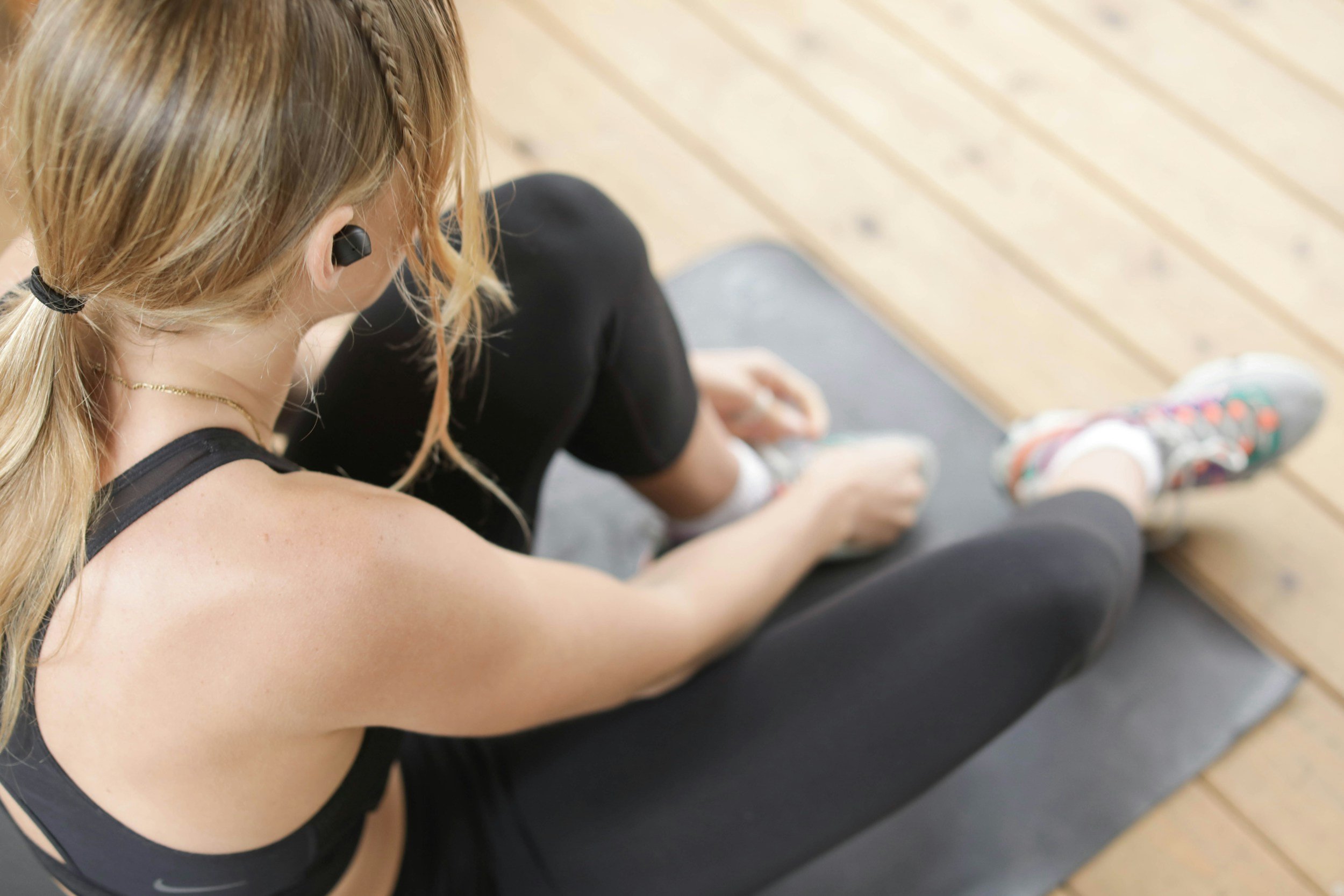
There’s nothing wrong with finishing a session feeling like you could have done a little bit more. In fact, that can be a much better starting point than doing so much that you’re too sore or tired to move again for another week.
2. Expect things to feel a little different at first
If you haven’t moved in the same way for a while, certain things might feel surprisingly challenging.
Your legs might tire more quickly. A pose that used to feel familiar might suddenly feel wobbly. Your mobility might feel a little reduced. Or you might simply notice that your stamina isn’t quite where it was.
That doesn’t mean you’re back at square one.
Our bodies are very good at adapting to what we regularly ask them to do, and after a break they often need a little time to readjust again.
Try not to use your first session back as a test.
Instead of asking, “Can I still do this?”, notice what’s happening today and work with that.
3. Focus on consistency before intensity
When motivation hits, it’s tempting to plan an entire new routine.
Monday: yoga.
Tuesday: gym.
Wednesday: run.
Thursday: another class.
Friday: realise this was wildly optimistic.
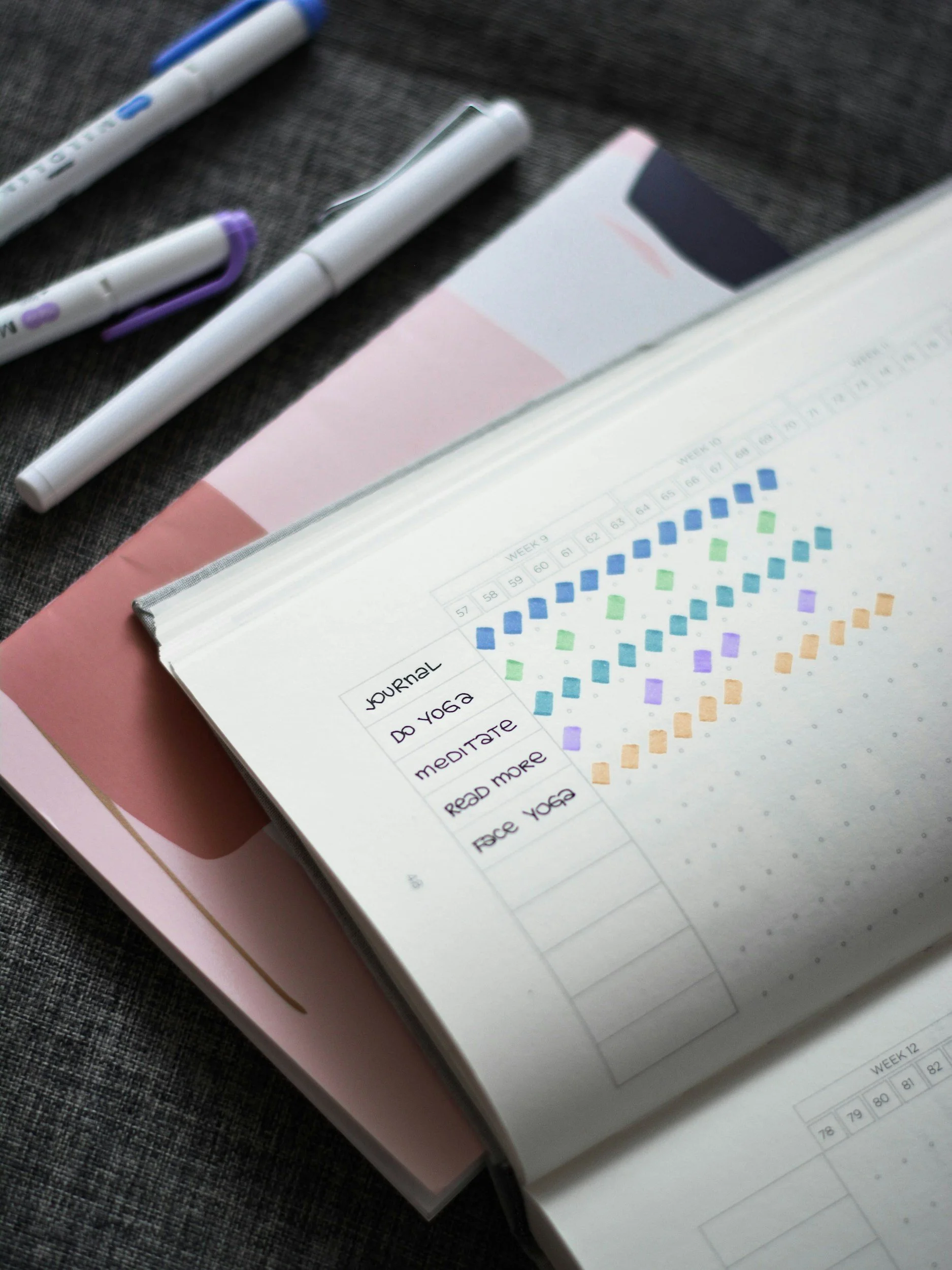
It can be tempting to make huge changes all in one go e.g. daily yoga, meditation, journaling, reading, you name it! However, it’s better to pick one thing and build that as a habit.
A smaller commitment that you can actually maintain will usually get you further.
That might be one weekly class. A 20-minute practice at home. A walk after lunch. A couple of short strength sessions.
The aim isn’t to create a perfect routine. It’s to find a rhythm that fits your actual life.
And that rhythm doesn’t have to look the same every week.
Some weeks you’ll have more time and energy. Other weeks you won’t. A sustainable routine has a bit of flexibility built into it rather than collapsing the moment life gets busy.
4. Let your breath set the pace
One of the things I love about yoga is that the breath gives us an immediate clue about how we’re moving.
If you’re rushing, holding your breath or struggling to breathe comfortably, that can be a useful sign that you’ve pushed the pace a little too far.
Slowing down enough to reconnect movement and breath can make a practice feel much more controlled and much less frantic.
It also creates a natural rhythm.
You move. You breathe. You repeat.
Rather than racing through a sequence, you start to notice how your body responds and whether you need to speed up, slow down or pause altogether.
This sort of awareness is useful far beyond yoga too, the next time when you’re walking around or doing stuff for work notice your breath. Perhaps experiment and slow it down a little to see what happens? As they always say… slow and steady wins the race.
5. Build variety back in gradually
You don’t need to tick every fitness box in your first week back.
Strength. Cardio. Mobility. Flexibility. Balance. Recovery.
They all have value, but trying to cram everything in immediately can make getting back into exercise feel like another job.
Instead, build things up over time.
You might start by simply moving more regularly again, then gradually introduce a little more strength, mobility, challenge or variety as your body settles back into it.
And remember that different types of movement support each other.
A stronger practice doesn’t mean you have to skip mobility. A gentler session isn’t wasted because you didn’t sweat. Rest and recovery are part of the picture too.
6. Don’t wait for motivation
Motivation is great when it turns up.
Unfortunately, it’s not especially reliable.
If your movement routine depends on feeling enthusiastic every single time, it probably won’t last very long.
It can help to remove some of the decision-making instead.
Book the class in advance. Put the session in your diary. Leave your yoga mat somewhere visible. Decide which days are realistic before the week gets busy.
The easier you make it to start, the less motivation you need.
You don’t have to feel wildly excited about every session. You just need a routine that’s easy enough to keep returning to.
7. Know when to ease off
There’s a difference between something feeling challenging because you haven’t done it for a while and something feeling wrong.
A bit of muscle fatigue or stiffness after returning to exercise can be completely normal. Sharp pain, worsening pain or anything that feels unusual is a different story.
You don’t get extra points for ignoring what your body is telling you.
Modify movements, take breaks and give yourself recovery time when you need it. And if you’re worried about pain or injury, get appropriate professional advice rather than trying to push through.
Find your rhythm, rather than racing back
Getting back into exercise after a break doesn’t need to involve a dramatic reset.
You don’t need to make up for missed sessions, punish yourself for taking time off or immediately return to your previous level.
Start small. Move regularly. Let things build.
The goal isn’t to be perfect in week one.
It’s to create a rhythm you can keep coming back to.
This September, Find Your Rhythm is our theme at Worker Bee Yoga. Across the month, we’ll be gradually building our practices using breath, repetition and movement to help you ease back in and rediscover a pace that feels good.
If you’ve had a bit of a break over the summer, you’re very welcome to join us exactly as you are.